

高电阻低热膨胀系数
熔融石英玻璃
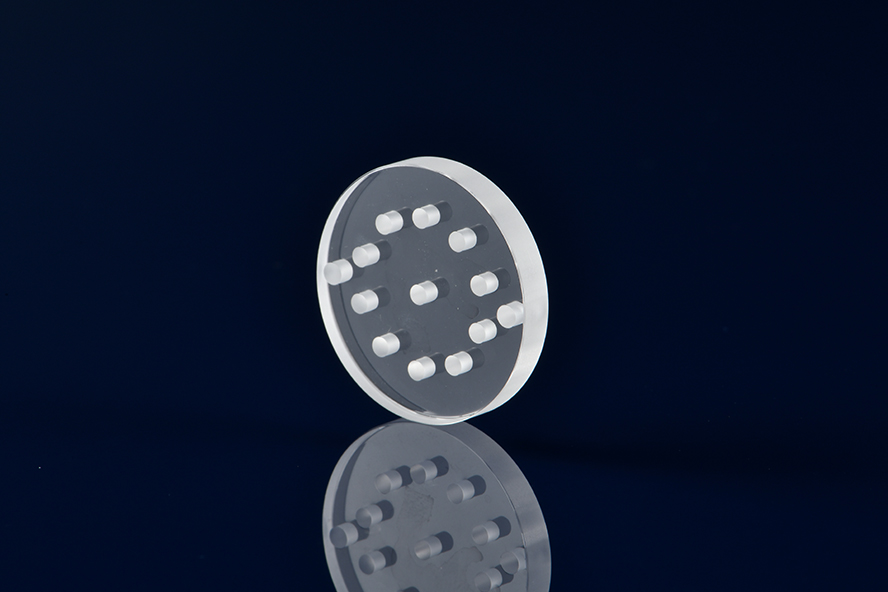
熔融石英玻璃因其优异的物理化学性能,被广泛应用于半导体、光学和科学研究等高科技领域。它由高纯度二氧化硅(SiO₂,>99.9%)的非晶态材料构成,不含其他氧化物,避免了杂质的产生。
熔融石英玻璃因其优异的物理化学性能,被广泛应用于半导体、光学和科学研究等高科技领域。它由高纯度二氧化硅(SiO₂,>99.9%)的非晶态材料构成,不含其他氧化物,避免了杂质的产生。
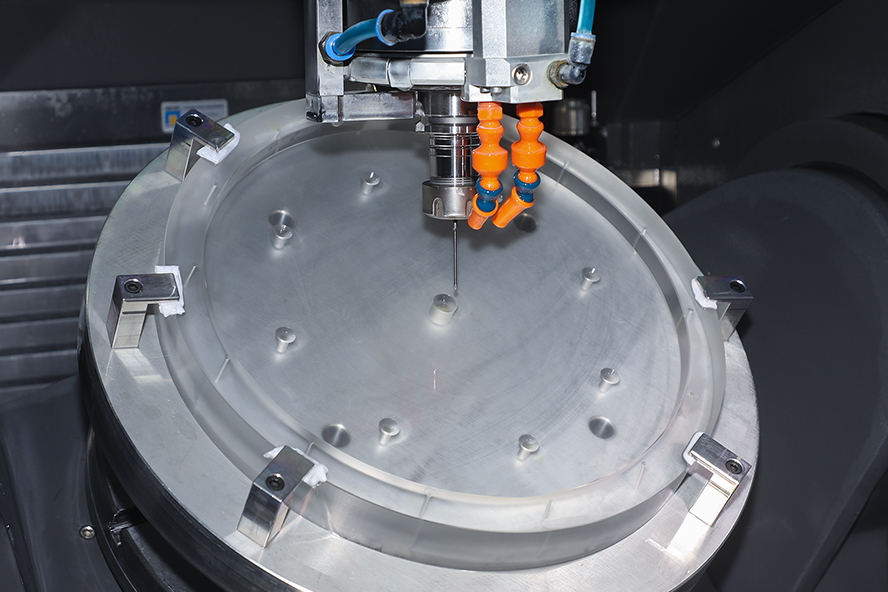
我们能够以极高的精度加工熔融石英的复杂形状、曲面和轻质结构。此外,我们还提供抛光、薄膜涂层和喷砂/粗糙化等表面处理工艺,以满足半导体和其他高精度应用的需求。
下表列出了我们标准熔融石英材料的典型性能参数。这些数值来源于内部测试和生产批次的统计分析,仅供设计参考。实际性能可能因加工条件和批次差异而略有不同。
| 材料性能 | 单位 | 熔融石英 |
|---|---|---|
| 密度 | g/cm³ | 2.2 |
| 抗弯强度 | MPa | 80 |
| 抗压强度 | MPa | 1100 |
| 弹性模量 | GPa | 220 |
| 泊松比 | — | 0.17 |
| 杨氏模量 | GPa | 72 |
| 热学性能 | 单位 | 熔融石英 |
|---|---|---|
| 热导率 | W/m·K | 1.38 |
| 熔点 | °C | 1730 |
| 最高工作温度 | °C | 1200 |
| 线膨胀系数 | 10⁻⁶/K | 0.55 |
| 电学性能 | 单位 | 熔融石英 |
|---|---|---|
| 介电常数 | 1 MHz | 3.75 |
| 击穿电压 | V/cm | 400 |
| 介电损耗 | 1 MHz | < |
| 电阻率 | Ω·cm | > 10¹⁸ |


BOROFLOAT® 33 is a high-quality borosilicate glass with excellent thermal stability and good chemical resistance. It offers a cost-effective solution for applications that do not require the ultra-low thermal expansion of fused silica.
JGS1 Fused Silica is a UV-grade optical quartz material characterized by high purity, excellent UV transmittance (185–2500 nm), and superior thermal stability. It is one of the three grades defined by China’s GB/T 31447.1 standard for optical fused silica (JGS1, JGS2, JGS3).JGS1: UV-grade, best for deep-UV and precision optics.、JGS2: Standard optical grade for visible–IR.、JGS3: IR-grade, ideal for thermal or infrared applications. Click to view our full guide to JGS1 Fused Silica
Fused Silica is one of the most commonly used low-CTE glass materials. Compared with Zerodur from SCHOTT and ULE Glass from Corning, fused silica has a slightly higher thermal expansion coefficient, but it offers excellent optical transmission, good thermal stability, and lower cost.
Because of this balance of performance and affordability, fused silica is widely used in optics, lasers, and semiconductor equipment.
Macor is a machinable glass-ceramic made from fluorophlogopite mica crystals embedded in a borosilicate glass matrix. This composition gives it a rare
combination of metal-like machinability, excellent electrical insulation, low thermal conductivity, and stability up to 1000°C (no load) while maintaining very tight tolerances.

English

German

Japanese

Spanish
Room 306, Gate B, Unit 1, Block 2 South, No. 1 Yile Road, Songshan Lake, Dongguan City, Guangdong Province, China(523808)